

NOTE: This is the basic order of events for a traditional Jewish ceremony. Most Jewish weddings in Israel will follow this structure. If you’d like a more detailed version and in-depth information, along with explanations for each phase, please see this series of articles from Chabad.
Kabbalat Panim

A Jewish wedding kicks off with the Kabbalat Panim. This is the pre-ceremony cocktail hour.
Appetizers and drinks are served, distributed by waiters walking amongst the guests and/or stands serving snacks. Usually starts about an hour before the ceremony.
If the couple is religious, there may be separate sides of the Kabbalat Panim for men and for women.
Ketubah Signing / Tisch

The first major action of the night, the Ketubah Signing / Tisch is led by the rabbi as the Kabbalat Panim is still in full swing. This is the moment where the groom makes things one step closer to “official” so everyone celebrates accordingly, with singing, drinking, and general merriment.
Close friends of the bride and groom watch as the groom and two witnesses sign the Ketubah. Although technically the bride is allowed to be present at the Ketubah signing, more religious women generally are not there during the process.
Bedeken
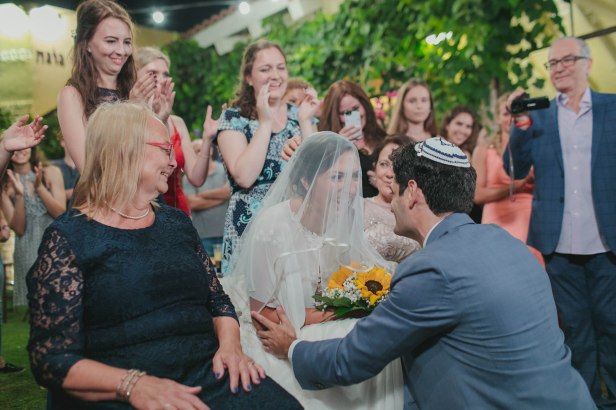
Once the Ketubah is signed, it’s time for the groom to collect the bride. If the couple is more religious, he will head over to the women’s side of the Kabbalat Panim, where he will veil her in front of her friends and family. If the couple is less religious, the groom will veil his bride as she walks down the aisle. (see below)
Entering the Chuppah
Before the marriage ceremony takes place, the couple’s loved ones make their way to the Chuppah. Usually, brothers, sisters, and grandparents enter first.
Then the groom makes his way down the aisle, accompanied by either his parents or his father and the bride’s father.
The bride is the last to enter the Chuppah. She is usually accompanied by either her parents or her mother and the groom’s mother.

If the groom did not veil the bride during the Bedeken, he will do so at this time. I’d say that veiling in the aisle is the standard for an Israeli wedding.
When the bride makes her way down the aisle, she’ll stop halfway, before reaching the Chuppah. The groom, who has already made his entrance and is patiently waiting in the Chuppah, will walk (preferably slowly and dramatically) to the bride. As their guests cheer, the groom will veil his bride and the couple will take the final steps to the Chuppah together.
Some Ashkenazi brides will walk several circles around the groom. This is a tradition depending on one’s community, and not mandatory.
Once the groom steps under the Chuppah, he will put on Tallit (a prayer shawl.) In Mizrahi and Sephardic communities, the groom may wrap the Tallit around his bride as well.
Kiddushin & Nissuin
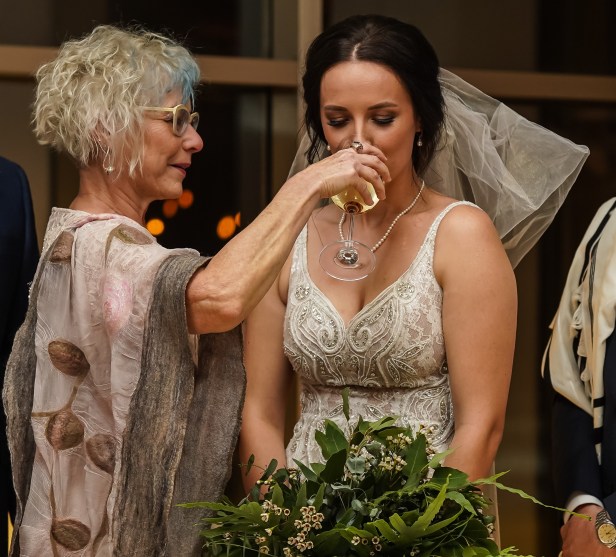
The Jewish marriage ceremony is technically 2-in-1: the betrothal (Kiddushin) and the marriage (Nissuin.) There’s no break in between the phases – they take place in the same ceremony under the Chuppah.
The ring exchange and reading of the Ketubah are considered to be the Kiddushin, and the 7 Brachot and breaking the glass are the Nissuin.
The rabbi starts off the Kiddushin by reciting the blessing over the wine, and then the special betrothal (Kiddushin) blessing. The groom sips from the wine glass, and the bride’s mother will hold the wine glass for the bride while she sips from it.
Ring Exchange
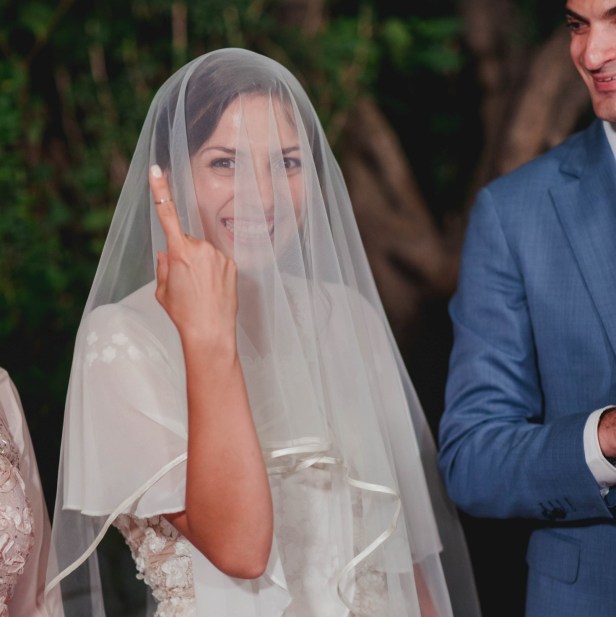
The groom makes the statement: “With this ring, you are consecrated to me according to the law of Moses and Israel.” The groom then places the wedding band on the bride’s right index finger.
Some rabbis prefer that the groom make the statement at the same time as placing the ring on the bride’s finger. In any case, the ring exchange must be witnessed by 2 kosher witnesses (adult observant Jewish men) to be Halachically valid.
Traditionally, only the groom gives a ring to the bride and the bride does not reciprocate.
Some rabbis do allow the bride to give a ring to the groom – if so, the rabbi will explicitly state that the bride is giving the groom a “gift” and this is not her consecrating him in return, thus keeping the marriage Halachically valid.
Reading the Ketubah
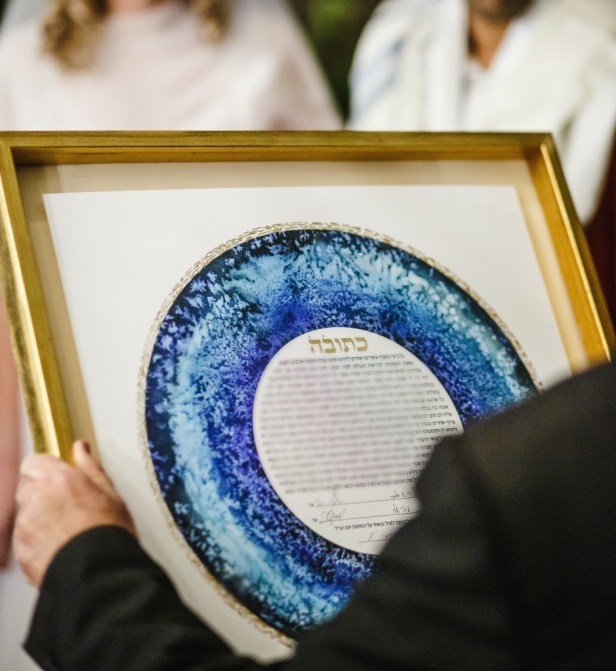
After the ring exchange, it’s time for the rabbi to read the Ketubah. The Ketubah (Jewish marriage contract that outlines the husband’s obligations to his wife) is read aloud in front of all the guests.
Once the rabbi is done reading, the Ketubah is given to the bride, who usually hands it to her mother, for safekeeping.
7 Brachot

The 7 Brachot are 7 blessings that are read by loved ones of the bride and groom. The Brachot readers stand beneath the Chuppah, one by one, where they are given the cup of wine to hold while saying the blessings.
These blessings are the blessing over wine, and 6 blessings specifically for the newlyweds and their marriage. In the traditional Jewish ceremony, only adult Jewish men are permitted to read the 7 Brachot.
Once the 7 Brachot are finished, it’s time for wine again. This time, after the groom sips from the cup, he holds it for his wife as she sips.
Breaking The Glass

Now it’s time for the grand finale and everyone’s favorite part of a Jewish ceremony – breaking the glass. A wine glass, usually wrapped in tinfoil or a cloth napkin, is placed under the groom’s foot. He says: “If I forget you Jerusalem, let my right hand lose its skill.”
This serious statement on a joyous occasion is a somber reminder to the Jewish people to never forget the destruction of the second Temple (and some would argue, other catastrophes that have befallen the Jewish people.) The groom stomps on the glass, smashing it, and the guests cheer “Mazel tov!”
Party Time

It’s considered a mitzvah to make the bride and groom happy on their wedding day, so guests come to a Jewish wedding with the intention of creating an atmosphere of joy and celebration. After receiving congratulations from their guests, the bride and groom head to the Yichud (seclusion) room.
Traditionally, this is where the marriage was consummated – today, most brides and grooms eat a meal together in the Yichud room. The bride and the groom get a small break from the chaos of the day and some much needed privacy, then join their guests for the festivities and exuberant dancing.
 The Israeli Wedding