Let’s start off with some common terms you will encounter in your venue search.
Kabbalat Panim קבלת פנים
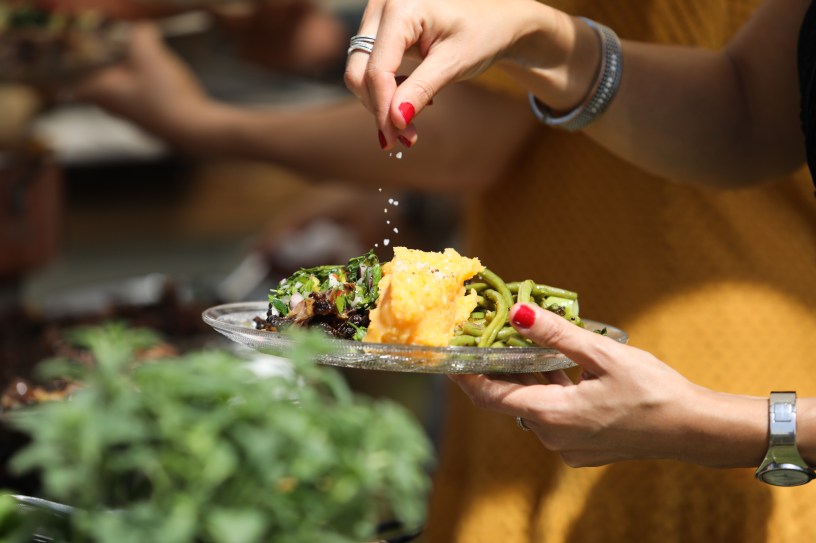
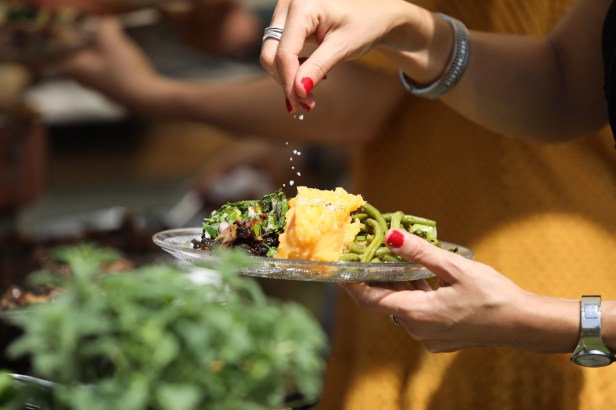
Literally means “receiving faces.” Loosely translated – “guest reception.” This is the pre-wedding cocktail hour.
Appetizers and drinks are served, distributed by waiters walking amongst the guests and/or stands serving snacks. Usually starts about an hour before the ceremony.
Olam אולם
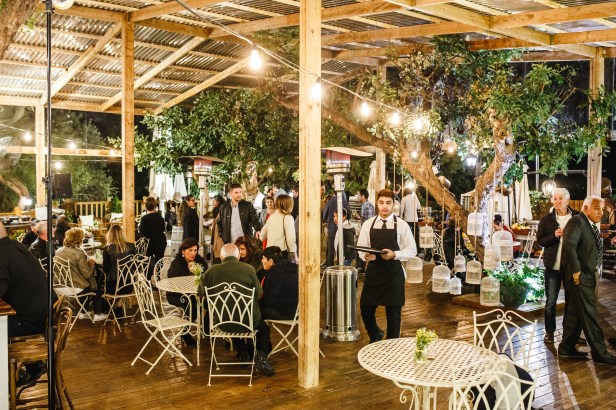
This general term means “venue.” It could mean a closed wedding hall, indoor/outdoor space, vintage villa, etc.
A good rule of thumb is that an Olam will have: set up for pre-wedding cocktail hour (Kabbalat Panim), tables, chairs, and waiters for dinner service, a Chuppah for the ceremony, and a dance floor.
Gan Eriu’im גן ארועים
Literally translates to “Event garden.” This means a venue with a substantial outdoor area, most likely ideal for the summer months.
Usually offers some sort of “covering” for the colder months, and some are closed completely during the winter. A Gan Erui’im will also have the standard amenities you’ll get with an Olam.
How Do I Start My Venue Search?
I advise that you start your search by asking friends who’ve recently gotten married about their experiences at their venues and Mit4Mit.
While the site is in Hebrew, Mit4Mit has comprehensive reviews of every wedding venue in Israel. You can also look up the places via geotags on social media, to see how they look outside of glamour shots on their official websites.
Once you find some venues you like, call them and schedule an in-person visit. Keep in mind that places can look very different during the daytime vs. the evening, when they’re decorated for a wedding or if you’re seeing the venue the morning after a wedding, etc.
It’s likely that your contact at the venue will ask you how many guests you’re expecting – and it’s likely that they will not want to discuss prices over the phone.
Personally, I believe these are the most critical factors in choosing the right venue for your Israeli wedding:
Size of your wedding
It’s crucial to make sure that the venue you pick is a good fit for the number of guests you’ll have. More on that in the section below.
Vibe
Go with your gut. Does something about the place simply rub you the wrong way? Or, on the contrary, did you instantly feel at ease once you walked inside the venue? I advise trusting your instincts.
Convenience
How far away is the venue? Is there a parking lot? If it’s outside of the city where you live, how long is the drive? You may need to hire a Hasa’ah to deliver your guests to the wedding – more on that here.
Bigger Is Better?
From informal polling of friends and personal experience, I’d estimate that the average Israeli wedding has at least 250 guests. The reasons why big weddings are preferred in Israel are both societal and practical.
Israeli society is generally very family-oriented, and rather than focusing exclusively on the couple, the Israeli wedding is viewed as a family event. It’s common for the parents of the couple to invite just as many (if not more) guests than the couple themselves.
It’s an opportunity to be hospitable and inclusive, so this means not only inviting your entire office, but of course they each get a +1 and so on.
Another reason why Israelis have big weddings is due to finances. The standard gift to give at a wedding in Israel is cold, hard cash. The idea is that the couple can use the money to recoup their expenses for the wedding, making it a financially neutral transaction. The more guests you invite, the more cash gifts you receive, and the better the chances of breaking even.
Additionally, venues offer incentives for having a big wedding. A venue may charge 280 shekels per meal for a 150 person wedding, but will agree to charge 240 shekels per meal for a 250 person wedding, and way less than that for a 350 person wedding.
Every venue has a minimum number of guests they’re willing to work with – and many times, it’s 200 people.
If you are planning on having a small wedding, click here for more information.
Internal vs. External Vendors
All Israeli wedding venues have partnerships with preferred vendors, who they work with on a regular basis. From DJs to decorators, florists to photographers, your contact at the venue should be able to provide you with a list of vendors for anything you need for the event.
Oftentimes, since you were referred to them by the venue, these vendors will give you a better deal or offer special packages. However, you should be able to bring in external vendors for anything you like.
What Should My Israeli Wedding Venue Provide?
Assuming that you are not getting married on a beach that’s not part of an established venue or in the middle of a national park, your wedding venue should provide:
Kabbalat Panim area
Bar
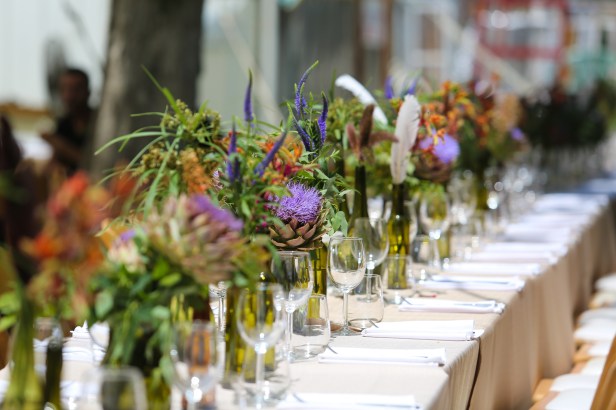
Tables, chairs, and waiters for dinner service
Kitchen
Sound and lighting
Chuppah for the ceremony
Dance floor & set up for DJ or live band
Restrooms
 The Israeli Wedding